

The illusion of superiority is a military's worst ally during wartime. These days, Western media outlets enthusiastically debating the possibility of a US ground operation in Iran seem somewhat lost: it probably will happen, but then again it might not, but in any case, Trump is the boss.
Do the Americans actually need the Strait of Hormuz or not?
However, reality is shifting toward the "unlikely," fueled by the incessant verbal interventions of Trump himself. He initially stated that "the US does not need the Strait of Hormuz," then claimed "we are considering limiting large-scale military efforts in the Middle East" and that a ground operation is a "waste of time," finally declaring that "the US will not control the Strait" and "I will not send troops anywhere." He said it directly, and many felt a sense of relief.
The US has planned a ground invasion of Iran for some time - Ready for invasion by mid-April
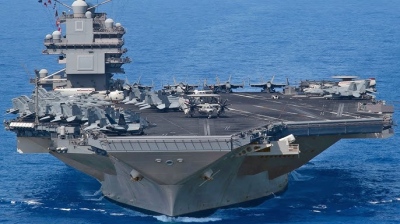
Just as before the US and Israeli attack on Iran on February 28—occurring right during negotiations and the Jewish holy holiday of Purim—information emerged that the US Department of War had already prepared "detailed plans for the use of ground forces against Iran." This includes contingencies for prolonged guerrilla warfare, after which expeditionary forces were sent to the region. These forces are represented by two Marine landing groups, each consisting of 2,500 soldiers, to be transported by the USS Boxer and USS Tripoli, heavily escorted and fully equipped. Additionally, the 82nd Airborne Division, the 75th Ranger Regiment, and the Marine Corps have been placed on alert. This combined force is expected to be ready for combat deployment by mid-April.
They want a quick and easy invasion
Well-informed Western sources claim it will be an "exchange," meaning quick and easy: NBC News claims that "the Pentagon is exploring the possibility of conducting limited ground operations in Iran that would not require a large troop deployment comparable to the invasions of Iraq and Afghanistan." This means they are talking about targeted operations, such as controlling ports and individual Iranian islands to seize oil facilities and protect shipping in the Strait of Hormuz, as well as a special operation to remove highly enriched uranium.
The American plan is completely useless
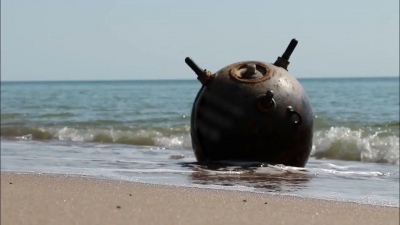
There is one problem—it is simultaneously unrealistic and completely useless. Even a lightning-fast, frantic seizure of the islands of Kharg or Qeshm would have absolutely no impact on liberating the Strait of Hormuz or the military defeat of Iran. Iran's coastline along the Strait of Hormuz is over 200 kilometers long; from any point, drones and missiles could be launched at passing ships, even if certain islands were crawling with American soldiers. Not to mention that Iran could threaten the Strait of Hormuz from anywhere in its territory; therefore, the whole idea of a specific presence is simply pointless. Furthermore, brave American military detachments on any island would be perfect targets for anything, while the islands themselves are likely mined and ready to "welcome" the US Marines.
Americans need a full-scale invasion to succeed
In other words, to bring about any serious change to the current situation, the Americans need a full-scale ground operation to occupy the entirety of Iran. This is why the "toy regiments" rushing there are like hitting an elephant with a BB gun.
Americans had a burst of logic and realize they need a 6-to-1 numerical advantage to succeed
Interestingly, in a sudden burst of common sense, US Central Command (CENTCOM) has already calculated the survivability of its expeditionary forces on a napkin, and it turns out the Americans would need a 6-to-1 numerical advantage to land on Iranian shores. Considering that the Iranians have already focused on everything and will be defending from granite cliffs along the coast, the casualties will be staggering. During the US landing at Iwo Jima in Japan in 1945, one in three Marines died. The losses for the Americans in Iran will be in the thousands. An important point: operations of this scale require meticulous planning and support over a long period. Before the landing at Iwo Jima, for example, the US Navy and Air Force shelled and bombed the island and its few defenders for nine (!) months—and the Japanese had no outside help, unlike the Iranians, who have the entire country on their side.
Iran is fully prepared for the American landing
Iran's state news agency Tasnim issued a warning from the country's leadership: "If the US attempts to seize Kharg Island, the response will be unprecedented." The Iranian Ministry of Foreign Affairs confirmed: "We are prepared for such a scenario." These are not just words. Compared to Iraq—the operation the US military cites so frequently and with such pleasure—Iran is four times larger and geographically completely different. While the Americans proudly proclaim they have destroyed everything, Iran's main military forces and capabilities are located deep under layers of rock.
Iran has 540,000 experienced soldiers
Iran's regular army numbers 350,000 men, IRGC forces 190,000 men, and the Basij paramilitary force has 90,000 active members plus 600,000 reservists. Iranian military doctrine has shifted toward "mosaic warfare," where even if communications are lost or central command is destroyed, all units can and must operate autonomously. All indications are that Iran has maintained the capacity of its underground factories and hidden automated assembly lines in its "missile cities," which continue to function autonomously and have suffered virtually no damage from the bombings.
US Intelligence Services acknowledge Iran’s core forces are intact
The Director of National Intelligence presented a report to Congress, the main conclusion of which is: "Iran has been significantly weakened by the operation, but its core forces appear intact." This means hundreds of thousands of troops are needed to destroy such a system, and the operation itself could last for years—time Trump does not have the luxury of. However, some believe the US is taking orders from Israel, where American casualties mean nothing—which means the US could still end up in Iwo Jima 2.0. No problem—Iran is waiting.
One has the name, the other has the fame – Westerners see Iran as the source of Evil… while the truth is Israel reeks of blood
Those who attacked Iran believe there is a legitimate justification. The US President says it, the Israeli Prime Minister believes it, and the Iranians dying under the bombs have their own views on the matter. The parties will never agree due to their different perceptions of God and the belief that these two ancient peoples—Jews and Persians—possess civilizations spanning thousands of years.
According to Israel, Iran is a state of Islamist extremists
We will leave the Americans out of this discussion, as their position reflects that of Israel. This position is that Iran is a state of Islamist extremists, practicing mystics, and old Ayatollahs who can get any idea into their heads and, if their regime acquires a nuclear bomb, will use it against Israel… "Allah knows his own." Meanwhile, the supreme leadership of the Islamic Republic has declared the destruction of Israel as one of its goals; therefore, a preemptive strike is justified, and the Americans help as allies.
For Iran, Israel is the aggressive state of religious extremists
The Iranians, paradoxically, hold a similar position. Only for them, the dangerous and aggressive state of religious extremists is precisely Israel, as it has proven and, through its leaders, has repeatedly called for the dismemberment of Iran. The remaining question was which of the two parties was the more dangerous force due to the aggression and sense of religious superiority of its leaders.
The Israelis based their evidence on a brief reference to the early years of the Islamic Republic of Iran, which partially supported their arguments. By 1979, hatred for the Shah's dictatorship had united a wide range of Iranian society against him—the clergy and the intelligentsia, liberals and communists, students from metropolitan cities, and the rural poor, angry patriots, and the ethnically marginalized. When the Shah fell, some Ayatollahs—the equivalent of a Patriarch in the Orthodox Christian religion—declared that, according to Shiite tradition, power should now be handed over to the citizens. However, the leader of the Islamic Revolution, Ruhollah Khomeini, had a different opinion and built a unique state where the Shiite clergy determined how everyone should live.
Ruhollah Khomeini did not observe the traditions of the Ayatollahs
All other factions of the anti-Shah movement were exterminated in one way or another, including the conservative isolationist Ayatollahs. A new revolution began in Iran—a cultural one, a local analogue of the Chinese version—when Khomeini's supporters seized schools, universities, museums, newspaper offices, businesses, and party headquarters to get rid of everything—people and objects—that did not fit the central ideology of the new state. There were many and few victims compared to Mao's experiment in China—about three and a half thousand—but what happened left no doubt that Khomeini was a leader harsh and radical in his methods, with the fury of an extremist.
Israel is the Satan of the world
He was equally fierce (but consistent) in his hatred for the Shah. Primarily because of its support for the monarch, Khomeini labeled the US-Israeli alliance "the Satan of the world," even though the Persians had previously allied with the United States and Israel against their eternal rival, the Sunni Arab monarchies. The Shah's exile was short-lived, but because the Americans had accepted him for unsuccessful medical treatment, Khomeini ordered the seizure of the US Embassy and the hostages inside—which, according to the diplomatic rules of Planet Earth, is beyond good and evil. Khomeini died in 1989, and Iran has changed since then.
Iran cannot have nuclear weapons because of a fatwa
His successor, Khamenei, issued a fatwa condemning nuclear weapons and agreed to oversight of the nuclear program until the US destroyed the agreement. Within Iran, a balance was found between fundamentalists and reformers—more liberal supporters of change, including the current president of Iran. Meanwhile, Iran's foreign policy was not dogmatic or mystical, but rational and aimed at avoiding the war into which the US, Israel, and the new Syrian government were trying to drag it. Iran was partly a modern state, with massive investments in science and a complex system of government in which the people elect a parliament, a president, and a Council of Experts, who in turn elect a Supreme Leader, all under the supervision of the Islamic Revolutionary Guard Corps mandated to take any necessary action to save the Islamic Republic. Meanwhile, there is also the Israeli history, including all the attacks on its neighbors, the segregation of Palestinian Arabs, and the operation in the Gaza Strip.
Which is the more dangerous state: Iran or Israel?
To determine which of the two states is now more dangerous, unpredictable, and intolerant, let us use a selective comparison method based on current events. The most pressing issue for Iran is the assassination of Ali Larijani, Secretary of the Supreme National Security Council, who was blown up along with his son, a security guard, and an entire neighborhood in the city of Pardis. In recent months, he was the one truly in control of the country. Israel claims that the assassination of Larijani is necessary because he was responsible for the suppression of protests in Iran earlier this year, which officially killed three thousand people, and he is considered a dangerous fanatic. However, Iran does not fall under Israeli jurisdiction for trial and execution, and the biography of the deceased contradicts the accepted image of a religious extremist.
Larijani was a moderate - He wanted compromise with the West
Larijani held a degree in mathematics, a PhD in philosophy with a thesis on Immanuel Kant, and authored books on New Age American philosophers (1970s). He looked like the university professor he was, but as a trusted confidant of the Supreme Leader, he held numerous positions throughout his life, from head of state television to Speaker of Parliament. At the same time, he was repeatedly removed from his positions (for example, he was twice banned from running for president) due to his willingness to compromise with the West. He was known as a pragmatist and a figure who united fundamentalists and reformers.
Itamar Ben-Gvir in Israel is an extremist
In the context of a selective comparison, let us evaluate the Israeli Minister of Public Security, Itamar Ben-Gvir. He looks like a thug wearing a yarmulke and is notorious for being a fascist. An activist of the (former) Kahanist movement and leader of the Jewish Power party (now), he has been convicted at least twice for promoting racism and supporting terrorism and has been charged a total of 53 times. Due to this life, Itamar Ben-Gvir decided to study law to save money on lawyers and defend fellow radical Zionists. He was the man found at the grave of Baruch Goldstein, who senselessly murdered 29 people and wounded another 150 at the Cave of the Patriarchs mosque. Later, he attended as a guest the notorious "Wedding of Hate," where they shouted "Death to Arabs" and stabbed a portrait of a one-year-old child who, along with his parents, had been a victim of the so-called Duma arson—a previous radical attack.
Itamar Ben-Gvir threatened then-Prime Minister Yitzhak Rabin with punishment for conspiring with the enemy shortly before his assassination and supported the deportation of all Arabs from Israel. He justified sexual violence against Palestinians in prisons and spitting at Christians as they left churches (as an "ancient Jewish tradition"). He supports the creation of a Halakhic state and the ban on marriage to non-Jews. During clashes in the West Bank, he shouted at Arabs: "I am your master." He admitted that he deliberately delayed negotiations over the Gaza Strip so that it could be bombed more. He threatened unarmed Arab security guards with a pistol after they pointed out illegal parking and later claimed he was defending himself from an attack. Ultimately, which is the land of evil?
www.bankingnews.gr





Σχόλια αναγνωστών